Thursday, October 30, 2014

Disney Debrief


And so ends a chapter. From Snow White and the Seven Dwarfs to Planes: Fire & Rescue, the Disney Animated, Hybrid and Pixar Films Retrospective has finished. It’s been a wild ride, witnessing the evolution of Disney’s animation from 1937 up til 2014. And it’s been interesting to see how the company went through its fairy tale beginnings to packages films out of a necessity to save money, back to fairy tales and other storybook tales to a more contemporary feel. Then it had the Renaissance and resurged fairy tales once again. But following that it was a creative funk that had some good films, but lacked the creativity and love seen in a lot of Disney films. Lilo & Stitch was the only one of this time period to even make it into the top 20. And some of those are higher than the classics in the rundown. Honestly though, throughout this adventure my analytical skills have vastly improved. Looking back, I wouldn’t put Atlantis above Peter Pan, rather putting it somewhere in the upper 50s. There may come a time when I do a look back and reevaluate some of the choices I’ve made.
And fighting through the trenches themselves weren’t always easy. The time following the Renaissance was a complete slog. There were weeks that contained one movie that was actually pretty good. And the rest were subpar and mediocre at best sequels. And getting to Pixar’s movies were sometimes finding a gold nugget in the middle of a sewer. That’s not to say that all of the sequels were completely bad though. The Lion King sequels were quite good and The Rescuers Down Under was honestly better than the original. But most of them fell down hard, with more than a few resting across the Edge of Dissatisfaction. And the rest just barely missed getting sentenced there. I also watched what will probably be the worst movies I will ever see (barring a viewing of The Room), with things like The Proud Family Movie, Fox and the Hound 2, and Disney Princess Enchanted Tales: Follow Your Dreams. Actually. I think I’d rather watch The Room than any of those.
But there have also been some legitimate surprises. Mainly in the form of the Peter Pan franchise. Return to Neverland was great. And the Disney Fairies series not only subverted expectations, but were very much enjoyable. Sure, they didn’t make it across the Edge of Satisfaction, but they nearly did. They have great quality in terms of story and various elements that it makes me anticipate the next film coming in March.
How varied many of the Disney movies can be in terms of quality speaks volumes about how production studios can go through different phases of quality. Not everything’s going to be a smash hit, but if there’s no effort, then nothing will be. And when the sole focus is to make money by regurgitating storylines, quality is going to take a hard nosedive. But there’s always another day and Eisner being ousted in favor of Lasseter proved that.
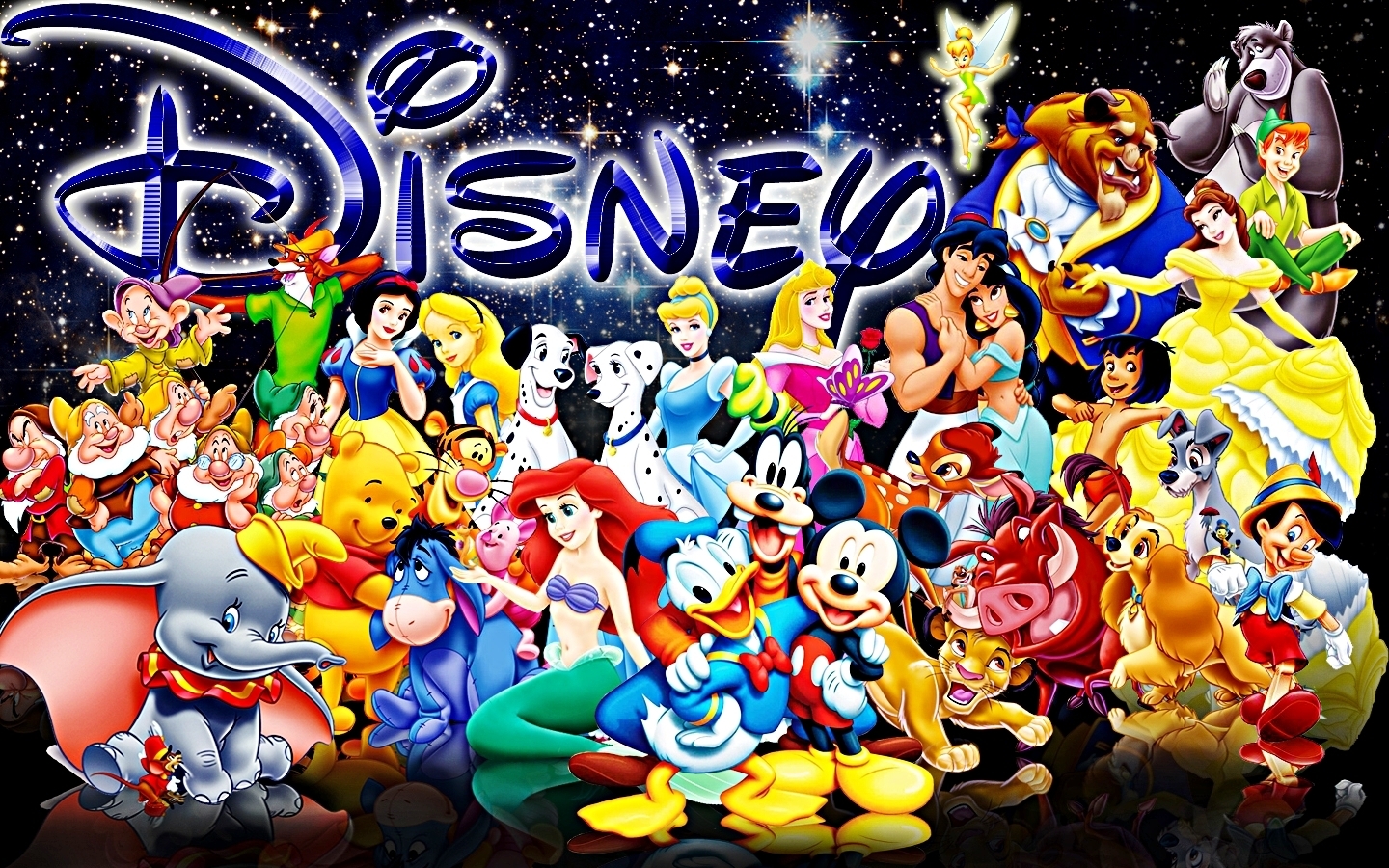
Looking at what’s recently been put out: Wreck-It Ralph, Tangled, Frozen, The Princess and the Frog, it’s easy to see the Disney magic that was incredibly apparent in its earlier works and during the 90s. And looking ahead to this year’s release of Big Hero 6 and what’s to follow, like Zootopia and Moana, it’s easy to see we just might be in a Second Renaissance.

And I’m looking forward to see what magic the Mouse brings. 

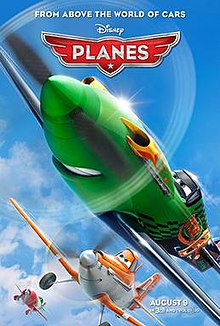
Planes

Planes FilmPoster.jpegIn 2013, DisneyToon produced a spin-off of Pixar’s Cars franchise, titled Planes. Starring Dane Cook, Stacy Keach, Priyanka Chopra, Brad Garrett, Cedric the Entertainer, Julia Louis-Dreyfus, Roger Craig Smith, John Cleese, Carlos Alazraqui, Val Kilmer, and Anthony Edwards, it grossed $219.8 million.

A cropduster working in a cornfield, Dusty Crophopper (Cook) practices aerobatic maneuvers in his spare time and dreams of becoming racer. Trained by a reclusive navy war plane named Skipper Riley (Keach) he trains to fly in the Wings Across the Globe race.

Planes is unique in that it’s in the same world as Cars, but is at the same time distinct and not a rehash of the film it spins off of. Dusty has to overcome his shortcomings of not being built to race in a very short time span. And not only does he do it, but eventually wins the respect of most of the racers he is flying with. It showcase’s Dusty’s character in how he goes about doing it: saving another racer and coming in last, having surprising determination and just being an all-around nice guy.
And the variedness of the race is also pretty interesting. Each leg is a different obstacle, such as high flying over the Himalayas, relying on GPS over the Pacific and maneuvering through the cold on the way to Iceland.
But while it’s a fun movie with a pretty good plot, it’s obvious that it was originally meant to be straight to video, but was given a few extra bucks to make it have a theatrical release. The writing is on par with many of the better direct to video sequels Disney put out and should have gone through a couple rewrites before it really went into production.

It’s underwhelming, but didn’t have to be.
#83 

Wednesday, October 29, 2014

The Pirate Fairy

The Pirate Fairy poster.jpgThe sixth and most recent Disney Fairies film, The Pirate Fairy was released in April of 2014. Once again, the cast came back and included Christina Hendricks and Tom Hiddleston. With exclusive screenings at the El Capitan Theater for about a month, it grossed $64.5 million.

Zarina (Hendricks), an extremely inquisitive dust-keeper fairy is amazed by the magic behind pixie dust and has secretly experimented with some blue dust. But they eventually cause an accident and she takes her experiments and leaves Pixie Hollow. But a year later, she returns as the captain of a pirate ship, with a young man named James (Hiddleston) as her first mate.

For some reason, the Fairies films always seem to have to add a new character in each film. But they don’t really do much in following stories. Case in point is Periwinkle, who only seems to appear on screen for about three shots.
On the other hand, what’s really interesting about The Pirate Fairy are the numerous call forwards and foreshadowing latent throughout it. At one point, one of the fairies hatches an alligator who follows them everywhere. It ends up causing trouble for the pirates, one of whom decides to throw a clock at it, which it swallows. Another time, James grabs one of the sail hooks and starts using it to fight. In the end, he’s chased by the baby crocodile, yelling how he’s not a codfish.
In addition to the origin story, Zarina’s arc is a pretty interesting character, kind of emulating Tinker Bell at the beginning of the first film. She’s a dust-keeper but has more of an interest in how thing work. So much so that she discovers new dusts and spends a year as a pirate perfecting it because she’s essentially chased out of Pixie Hollow. Her escapades end up discovering a new talent: Dust Alchemy. It really shows how many innovators aren’t really appreciated until the moment their creations are needed.
The Pirate Fairy is pretty good. Not only because it prompts those to continue working at their discoveries, but also because of the amount of backstory.
#75

Tuesday, October 28, 2014

Frozen

Frozen (2013 film) poster.jpgDisney’s most recent animated feature, Frozen was released in November of 2013. Directed by Chris Buck and Jennifer Lee, the film starred Kristen Bell, Idina Menzel, Jonathan Groff, Josh Gad, and Santino Fontana. Grossing $1.3 billion at the box office, it wound up getting a theatrical sing a long release and a Broadway musical. Nominated for 80 awards, it won 56, including the Academy Awards for Best Animated Feature and Best Original Song, The Alliance of Women Film Journalists for Best Animated Female, The Annie Awards for Best Animated Feature, Directing in an Animated Feature Production, Music in an Animated Feature Production, Production Design in an Animated Feature Production, and Voice Actin in an Animated Feature Production, The Golden Globe for Best Animated Feature Film, and the Denver Film Critics Society for Best Animated Feature and Best Original Song.

Elsa (Menzel) and Anna (Bell) are the royal sisters of the kingdom of Arendelle, but when Elsa is crowned queen, her secret is revealed to the world and unleashes an endless winter upon the kingdom. Fleeing to the mountains, it’s up to Anna to find her.

Until this point, Frozen had been in development hell since Walt was alive. And once it was released, it was eaten alive by fans, many of whom saw it more than 20 times and compared it to The Lion King. But it must be asked. Did it deserve all the hype? Was it as good as everyone was screaming?
NO.
Make no mistake, Frozen is good. But it certainly isn’t the best Disney film ever made. In fact, an entire character could have been cut from the final product and nothing would have been different whatsoever. Olaf was completely unnecessary and was only around to spout one liners and act funny. His rescue of Anna and line of “some people are worth melting for” could have been given by somebody else and nothing would have changed.
Disney also decided to deconstruct and mock their conventional tropes, like Love at First Sight, the desire aspect of many of the songs and True Love. And while that’s not a bad thing, it was analyzed to infinity. But Enchanted did most of those first and no one really cared then. The only new deconstruction was True Love, which ended up being reconstructed as the unconditional love between sisters. And including that was good as the bond between siblings is something that’s rare in any sort of media.
But Frozen really isn’t bad. Elsa and Anna both have great character arcs. The former going from hating herself because she’s different to embracing her powers, which ends up giving her control over them. And the latter learns to be more discerning when it comes to first impressions. And with Elsa, it really wasn’t her fault to begin with as her parents completely misunderstood what the trolls meant at the beginning.
It’s a good film, but is nowhere near perfect. Did it deserve to win Best Animated Picture? Maybe. Maybe not. That would require a viewing of the only film nominated that had any chance of being equal. But a review of The Wind Rises shall be left for another day.

#25

Sunday, October 26, 2014

Monsters University

Monsters University poster 3.jpgDan Scanlon directed Pixar’s prequel to Monsters, Inc., which was released in 2013. Starring everyone from the first film, plus Helen Mirren and Nathan Fillion, Monsters University grossed $743.6 million at the box office. And had music by Mastodon and Mötley Crüe. While it was nominated for numerous Annie awards, it only won two for storyboarding and editorial. It also wasn’t nominated for any Academy Awards and lost its bids for the Kids’ Choice Awards and Saturn Awards.

Enrolling in Monsters University in the Scarer Program, Mike Wazowski (Billy Crystal) forms a rivalry with James Sullivan (John Goodman). Eventually, their rivalry get kicked out of the program and conspire to get back in by joining the fraternity Oozma Kappa and enter the Scare Games.

Monsters University is certainly interesting. It has many standard tropes that are in most prequels, but it still has the charm its predecessor had. Mike and Sully, as stated above, don’t start out as friends and the rivalry is nothing short of bitter. And Randall, who is Mike’s roommate, starts out as a guy who just wants to get in with the popular crowd. But all this really foreshadows who they become. Randall ends up the weasel who will do anything to make it to the top and the duo become the well-oiled machine that becomes one of the most popular Scare Teams.
And that development is really highlighted in the film showing that being knowledgeable and having the skills to back that up are two completely different things. Mike has mastered every technical detail, but makes kids laugh. And Sulley has the ability, but he just uses that to coast by. But that furthers to show that the two need each other as Mike uses his knowledge to coach Sulley to become one of the best.
This is also seen in the other members of Oozma Kappa. They’re complete losers mainly because none of them have utilized their talents. And Mike helps them all to see that, which brings them to shoot to the top in the Scare Games. And, even after Mike and Sulley get kicked out, they get into the Scare Program and use everything they acquired during the games to excel.
It may not be as good as Monsters Inc., but it’s close.

#17

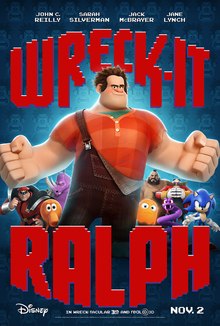
Wreck-It Ralph

Theatrical release poster depicting Ralph along with various video game charactersIn 2012, Simpsons and Futurama director, Rich Moore, directed Disney’s 52nd animated feature, written by Jennifer Lee and Phil Johnston. Wreck-It Ralph, starring John C. Reilly, Sarah Silverman, Jack McBrayer, and Jane Lynch grossed $471.2 million. It also won the Annie Award and IGN award for best Animated Feature, but it lost the Academy Award for Best Animated Feature.

Wreck-It Ralph (Reilly) is the villain in the world of an eight-bit video game called Fix-It Felix Jr (McBrayer) in an arcade. But Ralph is fed up with being disrespected as a bad guy for 30 years and sets off to find a medal.

Wreck-It Ralph is what happens when Disney gets the right mix of references and original plot, with a great story and so many nods to classic and contemporary video games. It brings Q*bert back to what its creator intended the exclamation to be: actual speech instead of swearing, but using him to advance the plot. Having Sonic appear, and making the appearance be a PSA to inform the audience. There’s also some hidden gems, such as graffiti that reads “Aeris Lives” and the password to the Sugar Rush code is the Konami Code.
The characters also wildly subvert audience expectations. Ralph may be the villain, but he’s a genuinely nice guy. The nicelanders may be the townsfolk in need of rescuing and are generally likeable in-game, but they don’t live up to their namesake. There’s also great character development, with Ralph going from hating how he’s seen by everyone to embracing it and the Bad Guy Anonymous creed and understanding what it truly means. It also helps that he’s found adoration in the unlikeliest of characters, which leads him to pulling off the act that saves the day, causing him to be loved by all. It’s when he finally embraced who he was that people started liking him.
Ralph’s character arc also coincides with how the Nicelanders understand how essential the character is to the game. Without him, there’s no game. With no game, they’re basically homeless. So not only does Ralph understand he should embrace who he is, they embraced what Ralph means to them. It’s a double whammy that seamlessly weaves itself together like strands of DNA.

#6

Saturday, October 25, 2014

Secret of the Wings

Secret of the Wings DVD cover.jpgThe 2012 installment of the Pixie Hollow franchise was released August 31. Entitled Secret of the Wings, everyone once again came back to voice their characters, adding Lucy Hale and Timothy Dalton. It had a limited theatrical release, in which it grossed $51.5 million worldwide, giving it a $30 million profit.

As winter comes, the fairies are preparing to help the Winter Fairies bring the eponymous season to the mainland. But Tinker Bell (Mae Whitman) wants to go to Winter Woods, which is forbidden. She goes anyway and finds her wings glow. Heading deeper in, she discovers that she has a sister, Periwinkle (Hale).

Once again, Tinker Bell’s curiosity and impulsive rebelliousness get the better of her. And once again, it is both beneficial and endangering. She has a sister finds that she has a sister, who shares nearly every facet of her personality. But her attempts to be able to bring a Winter Fairy, who can’t be in heat or warmth, put the entirety of Pixie Hollow in danger. And it’s her observations in how Periwinkle’s frost worked that helped save everything. There’s also what the secret of the wings actually is. Since the two have the same wing pattern, they glow when they’re near each other. And in the latter half of the film, Tinker Bell’s wing breaks, which has been established that there is no cure. Three guesses as to what the glow can do.
On the other hand, fairies having siblings is treated as rare and special. And it’s actually good, because Tinker Bell and Periwinkle are the first fairy siblings the films have seen, which means they actually are rare. But the method in which siblings are produced is odd. Fairies are born of a baby’s first laugh. Siblings occur when the laugh splits. If there’s a pause in laughter, shouldn’t what comes after be the second laugh?
Unfortunately, by this time, Disney realized they had a cash cow with the fairies and decided to milk it. And while it’s not as bad as many of the sequels they put out, it still isn’t as good as all the ones that came before.

#76

Thursday, October 23, 2014

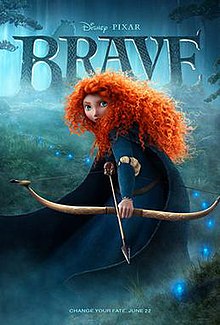
Brave

A girl with long, curly red hair stares at the viewer holding a bow and an arrow. Behind her is the film's title while at the left shows a bear staring at her.In 2012, Pixar released Brave, directed by Mark Andrews and Brenda Chapman, Pixar’s first female director. Starring Kelly Macdonald, Billy Connolly, Emma Thompson, Julie Walters, Robbie Coltrane, Kevin McKidd, and Craig Ferguson, the film grossed $539 million. It ended up winning the Academy Award for Best Animated Feature Film, The Alliance of Women Film Journalists Award for Best Animated Feature and Best Animated Female, The Golden Globe for Best Animated Feature Film and a Grammy for “Learn Me Right,” performed by Mumford & Sons and Birdy. It lost the Annie Award for Best Animated Feature to Wreck-it Ralph.

In the low middle ages, Merida (Macdonald) lives with her father King Fergus (Connolly) and mother Queen Elinor (Thompson) who wants her to marry the eldest son of the head of one of three neighboring clans. But Merida encounters a witch (Walters) in the forest and buys a spell hoping to change her mother’s mind on marriage. But it has unforeseen consequences and Merida must undo it before it becomes permanent.

The Tangled review mentioned how hair is the number one aspect to avoid in 3D animation. The Disney animators didn’t get the memo and neither did Pixar. In fact, they scrapped their entire code and rewrote it from the ground up, just to make sure Merida’s hair was perfect. Such attention to detail further shows why Pixar continues to be one of the greats of animation, even if some plots aren’t that great.
And the plot to this film is actually pretty good, focusing on familial love and repairing broken relationships between a mother and her daughter. In everything that happens with Merida being unwilling to marry for political reasons and Elinor constantly being exasperated with Merida’s adventurous spirit, the two reconciling and finding a way to compromise makes for a good resolution. And it shows how the two come to understand each other. Merida has to use the diplomacy she learned from her mother and Elinor has to rely on her strength as a bear. It shows how the two can use the qualities they don’t often show.

On the other hand, Merida is kind of a mashup of quite a few of the Disney princesses in terms of character. And there’s the flowing landscapes of Scotland. Or what little we see of them. Pixar really didn’t use the highlands to their advantage. We got some of it and we got a lot of forest and ancient ruins. But Scotland is much more than that and the films should really have shown off more than just a couple sequences. Sequences that were rushed to boot.
#27 

Tuesday, October 21, 2014

Winnie the Pooh

Winnie the Pooh Poster.jpgAfter Lasseter took over, the three previous theatrically released Winnie the Pooh films were stricken from the main canon. However, in 2011, Disney’s 51st animated film was a part of the franchise aptly named Winnie the Pooh. Starring Jim Cummings, Travis Oates, Tom Kenny, Craig Ferguson, Bud Luckey, Jack Boulter, Kristen Anderson-Lopez, and Wyatt Hall, it was narrated by John Cleese and had music performed by Zooey Deschanel, which were written by the co-writers of Avenue Q. It grossed $44.7 million.

When Pooh (Cummings) runs out of honey, he goes to find some and finds that Eeyore (Luckey) is missing his tail. But when everyone goes to find one, it’s discovered that Christopher Robin has gone away for a while, but left a note and everyone assumes he was captured by a monster called the Backson.

 This film really hearkens back to the 70s and the original film, especially in the characterizations. Everyone is back to their incredibly oblivious selves, highlighting their quirky qualities rather than playing up the negative. Pooh is back to being dim, yet very aware, Piglet isn’t that scared anymore so much as he’s high strung and says the oddest things, Rabbit is still highly on edge, but it’s not about work, Tigger has returned to being the overly confident blowhard and Owl is back to being somewhat smart, but just barely smarter than anyone else. And notice that Gopher isn’t in this. Just like he wasn’t in the books or the first movie.
It’s also much less dramatic than the films from the 90s and 2000s, which can be seen in many of its gags. For instance, at one point, Owl keeps talking about the “issue” at hand and Pooh constantly thinks he’s sneezing. There’s also a point where the gang, sans Piglet, is stuck in a hole and Piglet is trying to get them out. It keeps building on gags that don’t work, like when Piglet finds a rope, but cuts it up for each of them. And yet, it doesn’t occur to anyone that Owl, who is in the pit, can fly. And when he does fly up to encourage Piglet to travel to Christopher Robin’s house, h flies right back and everyone compliments him on the speech. And one of the plots is finding a new tail for Eeyore. And a song is sung every time a new tail is found. Including when Eeyore uses an anchor as one.
Then there’s the plot, which consists of three chapters from the books turned into one coherent story. And with all the scenes that don’t advance the plot, it really enforces that it’s all in Christopher Robin’s imagination.
Better than all the films between this and The Many Adventures of Winnie the Pooh. If there ever was a place to bring the series to a close, this is it.
#39 

Monday, October 20, 2014

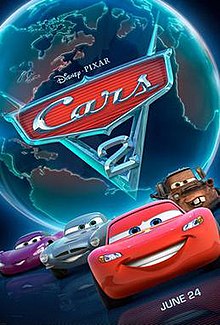
Cars 2

Cars 2 Poster.jpgPixar decided to release a sequel to Cars in 2011, aptly named Cars 2. Directed by John Lasseter, most of the original VA’s came back, with Lloyd Sherr replacing George Carlin and Michael Caine, Emily Mortimer, John Turturro, Eddie Izard, Thomas Kretschmann, Joe Mantegna, and Bruce Campbell joining the cast. While it grossed $599.9 million and ranked No. 1 on its opening weekend, it was received negatively and was the first Pixar film to not be nominated for an Oscar. It was nominated for the Annie Award for Best Animated Feature, but lost to Rango.

Oil Baron turned electric vehicle, Sir Miles Axlerod (Izzard) has introduced a clean alternative fuel and promotes it by sponsoring the first ever World Grand Prix. Piston Cup winner Lightning McQueen (Owen Wilson) is one of the finalists and brings along his friends as his pit crew, along with Mater (Larry the Cable Guy) as a first time member.

Cars 2 is what happens when you take the weakest aspect of a film, decide to try and try to build a sequel around it. The original film was all about a racecar learning how to take life slowly, smell the roses and learns some humility. This takes Mater and turns him into a secret agent, while putting the race on the backburner. And while there are a few generally funny moments, the inanity of the plot, along with the very unsubtle environmental message makes for a very weak film. WALL-E had an environmental message, but it was more or less subtle.
And the two spy characters quite obviously fail as spies. Honestly, a big part of the job is to be aware of surroundings. But they can’t do that if they won’t listen to someone they think is their partner. So many times in this film does Mater try to tell the two of them that he’s not really a spy, but they continue to chalk it up to him keeping his cover. There’s only so many times someone can fail to understand what their being told.

Cars wasn’t one of Pixar’s best films, but it utilized the sledgehammer for its message rather well. This, on the other hand, didn’t and was completely unwarranted.
#104, barreling across the Edge of Dissatisfaction.  

Sunday, October 19, 2014

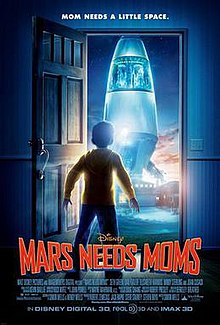
Mars Needs Moms

Mars Needs Moms! Poster.jpgIn 2011, Walt Disney Pictures decided to try and save Robert Zemeckis’ production studio and distribute Mars Needs Moms. With Seth Green providing motion capture, it starred Dan Fogler, Seth Dusky, Elisabeth Harnois, Mindy Sterling, and Joan Cusack. The film bombed, losing $135 million, becoming the second biggest box office bomb in history.

Milo (Green, Dusky) discovers his mother (Cusack has been abducted by Martians who want to use her skills in parenting to raise their own young. He hitches a ride on their craft and lands on the planet, determined to find her.

This film certainly deserved to lose money. It may have some good acting and visuals, but the story is quite boring. Milo wanders all around Mars in order to find his mom and comes across Gribble, who was in the same boat as him 25 years prior, but failed. There’s also an excitable Martian named Ki who thinks Earth is still stuck in the 70s. It’s a premise that really should have worked, but it just lacks a whole lot of heart, which does the film a disservice.
The characters are also annoying. Milo and his mom are your average pairing of preteen with attitude and exhausted mother, until the end when he realizes he loves her. But how long is it going to be until he starts acting up again? Gribble and Ki should have been the best and funniest characters the film offers. Problem is, he’s annoying and she doesn’t have a lot of characterization other than the “funny alien.” Really, her character was done much better by all the aliens from “Galaxy Quest.”
But again, the visuals are pretty good, especially with the surface of Mars and the very sterilized Martian base. It also does well in not forgetting about the lack of gravity. Unfortunately, as has been repeated many times before, good visuals can’t make up for a lackluster story with boring characters.

#106

Gnomeo & Juliet

Gnomeo & Juliet Poster.jpgIn 2011, Disney distributed a film produced by Touchstone, Miramax, Rocket Pictures and Arc Productions. Based on Shakespeare’s Romeo and Juliet, Gnomeo & Juliet stared James McAvoy, Emily Blunt, Jason Statham, Michael Caine, Maggie Smith, Patrick Stewart, Ashley Jensen, Stephen Merchant, Matt Lucas, and Ozzy Osbourne. With music by Elton John, the film grossed $194 million.

Elderly neighbors Mrs. Montague (Julie Walters) and Mr. Capulet (Richard Wilson) despise each other. And each one’s garden gnomes have an ongoing feud as well. Montague has blue-hatted gnomes and Capulet has red-hatted gnomes. But one day, Gnomeo (McAvoy) and Juliet (Blunt) run into each other and its love at first sight.

Why yes, director Kelly Asbury did work on Toy Story.
An appropriate word for this film could be “weird.” It seems to be self-aware in at the very beginning, it notes how the story has been told before quite a bit, but seeks to do so in a different way. And while that venture is successful, it has quite a few diversions from the original story. Most notably, Gnomeo and Juliet both make it to the end of the film, as does Tybalt. And it ends with a cast dance party.
There are also a lot of deviations with characterizations. Juliet’s disapproving nanny is now a wisecracking frog and the overly cautious and wise Friar Laurence is replaced by an overly excited lawn flamingo. Swordfights are taken over by lawn mower races, with cameos by Dolly Parton and Hulk Hogan (in the middle of England no less)
 A few of these deviations are cleverly referenced by a statue of Shakespeare, voiced by Stewart, who thinks his original idea was better. And there are a whole lot of other references laden throughout the film and for every good one, there’s one or two that just don’t work very well. As stated above, Shakespeare’s insistence that he “told you so” to Gnomeo is great. One of the gnomes quoting Bambi is funny, but feels out of place. Montague’s and Capulet’s houses are 2B and not 2B, clever but when Juliet comes across a dog and yells “out” while the owner yells “damn Spot” immediately after just feels forced. Elton John’s “Hello, Hello” playing when Gnomeo and Juliet first meet is a good song. But two gnomes referencing Brokeback Mountain and the frog referencing American Beauty don’t belong anywhere near a children’s movie.  
Why yes, director Kelly Asbury did work on Shrek.
The Shakespeare statue was correct, his version is much better and this is clearly changed for the kids. Sometimes that’s for the better. Other times, it’s not. And this film goes both ways.

#93

Saturday, October 18, 2014

Toy Story 3

The final installment in the Toy Story series was released in 2010. Directed by Lee Unkrich, Toy Story 3 brought most of the original voice actors back, replacing Jim Varney with Blake Clark and added Ned Beatty, Michael Keaton, Emily Hahn, Timothy Dalton, Whoopie Goldberg, Richard Kind, Bonnie Hunt and Kristen Schaal. The film grossed $1.063 billion and was the first animated feature to break the billion dollar mark along with the 13th highest-grossing film of all time. At the top of Quentin Tarantino’s list of favorite films of 2010, it won the Grammy for Best Score Soundtrack, Academy Awards for Best Animated Film and Best Original Song, and the Saturn Award for Best Animated Film.

Woody (Tom Hanks), Buzz (Tim Allen) and their friends deal with an uncertain future as Andy (John Morris) has grown up and is about to head off to college. He puts the toys in a bag meant for the attic, but the toys mistakenly think they’re being thrown away so they climb in a box bound for a daycare.

Foreshadowed by a line by Stinky Pete in the second film, this installment is probably the most impactful of all the Toy Story films. The first dealt with jealousy, delusions and depression when faced with reality. The second with abandonment and skims growing up. This one goes all out in growing up and moving on, totalitarianism, loss, and even the inevitable. But still manages to do so in a way that’s appropriate for both kids and the young adults that grew up with the franchise.
Andy does finally grow up and the toys realize they’re headed for the attic, despite their attempts to get him to play with them. And in a misunderstanding, the toys think it’s in their best interests to move on to a day care. A daycare ruled with a purple iron fist that smells like strawberries. But when they’re finally able to escape, they have to face the end via incinerator. It’s one of the most poignant animated scenes ever, with all of them one by one accepting their fates and holding hands, ready to go out together.
But the film isn’t without its lighthearted moments. Buzz is shown to have a third setting, other than Space Ranger and Toy: Spanish Space Ranger. There’s also the well-timed reference to Star Wars, just like the first two films, with Big Baby throwing Lotso in the dumpster a la Darth Vader and The Emperor. And then it tosses Brick Jokes to the audience, both set up in the first film with one carrying over into the second. Rex finally gets to pal around with an herbivore and The Claw ultimately chooses who will go.
Production also made sure this was the perfect ending to the trilogy, with the filmmakers bringing back John Morris as Andy. Prior to this film, Morris hadn’t acted since Toy Story 2. Sid also has a cameo as a garbage man and he, too, has the same voice actor.
The only problem is the film goes on for a little too long and could have ended a couple times before it did. It makes sense to have Andy bring the toys to Bonnie and introduce one or two to them. But he does it for every single one and plays with them.
The joke was that full grown adults were barreling through kids in line for the film at theaters screaming they had waited 11 years to see it. And in the end, it really was worth it. Toy Story 3 really is the best of the trilogy.

#5

Friday, October 17, 2014

Tangled

A man with a frying pan, a girl with long blonde hair, and a white horse.In 2010, Nathan Greno and Byron Howard directed Disney’s 50th animated canonical feature, based off the German fairy tale, “Rapunzel.” Starring Mandy Moore, Zachary Levi, and Donna Murphy, Tangled grossed $591.8 million worldwide. Spending six years in production, It was nominated for two Annie Awards, an Academy Award, a 2011 Teen Choice Award and won a Grammy.

Long ago, a single drop of sunlight fell to Earth and birthed a flower that had the power to heal anything. A woman named Gothel (Murphy) used the power for centuries, but it is taken by the kingdom to heal the pregnant queen. Wanting the power back, Gothel steals the princess and hides her in a tower, naming her Rapunzel (Moore). She is never allowed to leave the tower, but grows increasingly eager to head outside.

The Lion King started off massively huge and never backed down and The Great Mouse Detective began small and at various intervals, continued to top itself, but in very grandiose ways (the bar song, the trap, Big Ben). Tangled is able to do both, start off pretty big and continue to top itself, but does so subtly many times. It begins strong, with the idea of a flower springing up from a drop of the sun and giving a woman renewed life for centuries, then immediately growing with just how Rapunzel deals with staying in a tower all day. Then the pub song, her entering the kingdom for the first time, the lanterns and then the realization of who she is. Granted, the pub song, and those portions, are grandiose in various aspects. But the subtleness of it comes from the imagery laden throughout those parts and the shots and angles that work give them exposure, while still keeping the central focus on the characters. This can especially be seen during the "Kingdom Dance" segment. And the reprise to "Mother Knows Best" really cemented just how evil Gothel has been this whole time. It was established early on and the original run of the song showcased her manipulation, yes, but it drove the final nail to show how she'll resort playing off the desires of others to get what she wants back. It all continues to build and build and build until the climax.
And the cherry on this whole cake of wonder is the quality of the animation. Rule number one of 3D animation is to avoid hair, but the animators threw that rule out the window to feature 70 feet of it. And not just the hair by itself. It’s used as a rope, a lasso, gets wet, braided and then light up at times. And it never looks awkward, forced, or badly done.
This isn’t even going into the character arcs. Flynn is a thief and a flirt who really just wanted to hide until the heat went down, but got caught in helping some random girl into seeing floating lanterns. Said girl doesn’t even realize she’s heading to her destiny and just wants to see floating lights. But when she’s taken back to the tower, she comes to realize what she’s subconsciously been telling herself for 18 years. And Flynn comes to realize there’s more to life than stealing, money and being a hermit. And true, the romance is central to the story, but it doesn’t overpower their individual character arcs.  

#1

Thursday, October 16, 2014

Tinker Bell and the Great Fairy Rescue

Tinkerbell DVD.jpgThe Tinker Bell franchise continued in 2010 with Tinker Bell and the Great Fairy Rescue. In addition to the rest of the cast returning, Lauren Mote and Michael Sheen also provided new voices. Released cinematically in the United Kingdom and Ireland and at the El Capitan for two weeks, the film grossed $10.9 million.

While attending fairy camp on the mainland, Tinker Bell (Mae Whitman) attempts to find lost things. But when Vidia (Pamela Adlon) makes her curious about a human house nearby, she sneaks off to find it, eventually becoming trapped in a fairy house made by a young girl named Lizzie (Mote).

The sequel to a sequel and somehow, it’s better than the sequel. Unlike the other two, in which Tinker Bell’s negative qualities get the best of her, it’s her innate sense of curiosity about humans that lands her in hot water. But even then, she manages to use that situation to repair the relationship between Lizzie and her father.
And speaking of Lizzie, she’s actually a decently characterized little girl full. She’s obsessed with fairies, but only thinks she knows everything about them. When Tinker Bell finally finds a way to communicate with her, she hangs on every word and is just enthralled. Those who have passions that engross them will identify pretty well.
Vidia also undergoes some pretty good character development. At the beginning, like with the other two films, she starts out greatly disliking Tinker Bell. And she could have just let her “disappear” when she’s “captured.” But even then, she immediately goes to get help and throughout the rescue journey, she lightens up.

#71

Wednesday, October 15, 2014

The Princess and the Frog

Cartoon image of a woman kneeling in the Louisiana bayou in a princess costume with a frog in her hand, as a voodoo priestess, a witchdoctor, a firefly, and an alligator look on.Disney’s 2009 feature was its 49th canonical animated film. Based on the Brothers Grimm fairy tale “The Frog Prince,” The Princess and the Frog was written and directed by Ron Clements and John Musker. Starring Anika Noni Rose, Bruno Campos, Keith David, Michael-Leon Wooley, Jim Cummings, Jenifer Lewis, John Goodman and Oprah Winfrey, the film grossed $267 million. It was also nominated for Best Animated Feature and two songs were nominated for Best Music, Original Song.

In 1926 New Orleans, Tiana (Rose) has a dream to own her own restaurant and works two jobs to be able to save enough money to do so. Elsewhere, Prince Naveen (Campos) of Maldonia arrives and runs into Dr. Facilier (David), a voodoo witch doctor who tells him he can make Naveen’s dreams come true.

Disney had two firsts with this film: the first black princess and the first princess to be an American citizen. Those are very important milestones along with the film being widely considered the start of a second Disney Renaissance. And it’s a great film to kick it off, even though it’s only pretty good.
Tiana and Naveen have some good intertwining character arcs. She has to learn to have her eyes set on her dreams but at the same time, not let life pass her by. And on the flip side, Naveen has to learn to at least have a work ethic and not spend his life being a lazy good for nothing. The funny thing is Tiana completely misunderstands that it’s not even more hard work she needs at first, just showing just how badly she wants that restaurant.
As a villain, Dr. Facilier is really good, albeit considerably stupid. He’s great at formulating plans and talking his way into people’s trust and out of a jam. Until the end that is. Because his Friends on the Other Side were only his friends until they realized he wasn’t of any more use to them. He was stupid for thinking he could control them and get them to go along with his plans when they were doing all the controlling.
Then there’s Ray, who is the best part of the film as he thinks a star is his one true love. And then proceeds to completely prove Timon from The Lion King right. He got stuck up in that big bluish black thing. 
#25

Monday, October 13, 2014

Tinker Bell and the Lost Treasure

Tinker bell and the lost treasure filmposter.jpgIn 2009, after Tinker Bell proved to be a good investment, a sequel was made. Tinker Bell and the Lost Treasure was released on DVD and Blu-ray, generating about $50 million in revenue. It also premiered at the UN Headquarters and Tinker Bell was named the “honorary Ambassador of Green” to help promote environmental awareness among children. Most of the cast returned, but America Ferrerra was replaced by Angela Bartys.

As the nature faries are preparing to bring autumn to the mainland, Tinker Bell (Mae Whitman) is trying to make a Pixie Express. But fails. However, Queen Clarion (Anjelica Huston), Fairy Mary (Jane Horrocks) and Redleaf, the Minister of Autumn (John DiMaggio) send for her, explaining that she is to create a new scepter for the Autumn Revelry.

Settle in, because there’s quite a few Pixie Hollow films, with more on the way. But if they continue to have the same quality this and the last film did, then it’s not so much of a worry as they’re far better than the onslaught faced before them.
Since she’s already realized she’s meant to be a Tinker Fairy, a new plot was needed and this one is definitely not a rehash of the first. Actually, it’ nothing like the first. Tinker Bell fully embraces her skills in order to create something and her craftiness when it goes south and when it continues to go south.
Once again, the pacing and stakes of the film makes for a good children’s movie. Instead of being able to wish the moonstone back together, she actually has to face presenting it shattered at the Autumn Revelry. But it’s the Eureka moment of a firefly creating a disco ball effect that she realizes a shattered moonstone would be more beneficial than a whole one.
Once again, meant for little girls, but has a charm that makes it better than expected. 
#70

Sunday, October 12, 2014

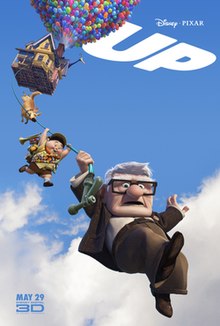
Up

A house is hovering in the air, lifted by balloons. A dog, a boy, and an old man hang beneath on a garden hose. "UP" is written in the top right corner.In 2009, Pixar released Up, directed by Pete Doctor who co-wrote the screenplay with Bob Peterson. The film, starring Ed Asner, Christopher Plummer, Jordan Nagai, and Bob Peterson, grossed $731.3 million worldwide. It also opened the 2009 Cannes Film Festival, becoming the first animated film to do so. Nominated for 68 awards, including Best Picture and Best Original Screenplay, it won 40 including Best Animated Feature, Best Original Score and the Annie Award for Best Animated Feature.

Carl Fredricksen (Asner) promised his wife Ellie (Elizabeth Doctor) that they would one day move to Paradise Falls in Venezuela. But life gets in the way and she passes before they can. Guilt-ridden, Carl shuts himself off from society in the house they built together.

What is there to say about Up that hasn’t already been said? Especially about the first 10 minutes.  It’s got humor, showing how Carl never quite learned how to tie a tie, joy in the many things the pair do together, sadness in the doctor’s office and Ellie’s eventual passing. There’s more emotion packed into that montage than most films have in a two hour run, completely proving the point of the meme stating it’s a better love story than Twilight.
SQUIRREL!
Um… anyway, from then on, it just keeps getting better, with Carl slowly coming to terms with Ellie’s death. It starts with an attempt to take the entire house to Paradise Falls and ending when he realized that in the years between Ellie dying and that point, where he realizes that until that point, he was failing to remember her in a way that she wanted. And the film becomes one of the best love stories that has ever been produced.
There’s also a lesson to be learned from Muntz, the villain. It’s not a bad thing to want to discover something new. But when it becomes an obsession to the point of giving your dogs the power of speech and making them your minions while killing everyone who gets in your way, then it might be time to reevaluate your priorities.
But what Up really does is it gives us a desire to not only love, but to explore. See new locales and find things you never knew existed. After all, adventure is out there.

#7

Saturday, October 11, 2014

Bolt

Bolt ver2.jpgDisney’s 48th canonical animated feature, directed by Chris Williams, was the 2008 film Bolt. Starring John Travolta, Miley Cyrus, Malcolm McDowell, Diedrich Bader, Nick Swardson, Greg Germann, Susie Essman and Mark Walton, the film grossed $310 million. It was also nominated for the Academy Award for Best Animated Feature, the Annie Award for Best Animated Feature and the Golden Globe for Best Animated Feature Film.

Bolt (Travolta) is a genetically altered dog with superpowers who fights alongside Penny (Cyrus) against the forces of Dr. Calico (McDowell). On TV anyways. In reality, Bolt believes his powers are real and the crew carefully hides anything that might reveal the truth to him. But one day, the crew chooses a cliffhanger plot, causing Bolt to escape and try to rescue her for real.

A lot of films and television series can’t get the trope of introducing a character to a new atmosphere right. But this film does well with it, especially in what it takes for Bolt to realize he really doesn’t have any powers. And even then, Rhino continues the charade, thinking Bolt’s still enhanced. Though, as with many Disney films, Bolt still manages to become a hero in the end by saving Penny from a burning building. Powers or not.
Mittens also has quite the interesting character arc. She’s an alley cat who believes humans can’t ever truly love an animal because her owners declawed her before throwing her out. She’s the streetwise mentor to Bolt, teaching him about the real world too. But when all is said and done, even she realizes she’s mistaken.
The whole concept of the plot is fascinating as well, taking the idea of The Truman Show and applying it to a dog. Granted keeping the façade up for Bolt is a bit harder because it’s a sci-fi/spy/action show. But they managed to do it, until the network executive showed up. And she’s the only real thing that can come close to a villain in the film. But she’s not evil. She’s just trying to make sure the network keeps all its viewers and nobody gets fired.

#43

Thursday, October 9, 2014

Tinker Bell

Tinker Bell DVD.jpgOut of the newly retooled DisneyToon Studios came the Tinker Bell franchise. And the first film, Tinker Bell, released in 2008 starred Mae Whitman, Kristen Chenoweth, Raven, Lucy Liu, and America Ferrera. Released cinematically briefly at the El Capitan Theatre, it grossed $9.2 million and spawned a Nintendo DS adventure game.
                                                                                                        Born from the first laugh of a baby and brought to Pixie Hollow, Tinker Bell (Whitman) learns that her talent is to be one of the tinkers, fairies who make and fix things. Taught by Bobbie and Clank (Rob Paulsen and Jeff Bennett), her desire is to go to the mainland for spring.

In terms of quality, Tinker Bell is surprisingly not that bad. It has a pretty decent story in where Tinker Bell realizes that what she’s good at is where she’s meant to be. But it doesn’t get through her thick skull until she tries her hand at being a garden fairy, water fairy, light fairy, animal fairy, and a fast-flying fairy. This may seem like it’s an incredibly saccharine premise and that’s true, but the way the plot is handled actually makes it decent.
It’s not paced like a television show and actually has the stakes of a halfway decent children’s movie in Spring itself is almost ruined because of Tinker Bell’s desires to not be just a tinker. But it’s her near-genius skills as a tinker that saves the day.
I realize I’m coming off as incredibly childish in giving a decent write up to a film marketed for girls, but maybe that’s because I spent so much time watching those mind numbing sequels. But still, for what it’s worth, it’s not amazingly perfect. But it’s not downright awful either.

#69